'Specialty coffee' is used to sell everything from competition Geishas to supermarket blends with rustic fonts. But the term has a technical definition with a number attached — and understanding it separates marketing fog from a genuinely useful quality standard that reshaped the entire industry in two generations.
The Technical Definition
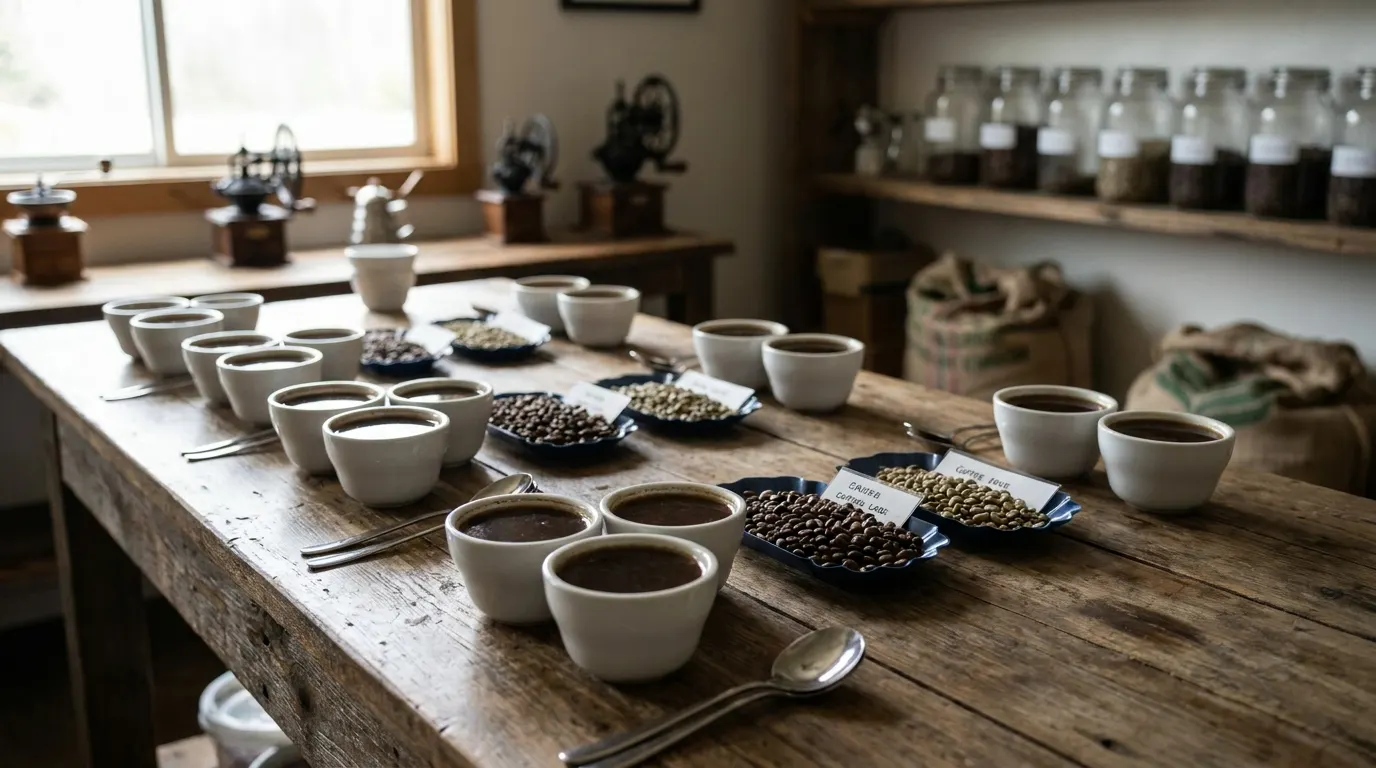
Under Specialty Coffee Association standards, specialty green coffee must score 80 or above on the 100-point cupping scale, assessed by licensed graders across fragrance, flavor, aftertaste, acidity, body, balance, uniformity, clean cup, sweetness, and overall impression. It must also pass physical grading: zero category-one defects (black beans, sour beans, foreign matter) and no more than five full category-two defects per 300 g sample.
The bands above the line matter commercially: 80–83 solid specialty; 84–86 premium specialty where serious single-origin trade concentrates — and where well-processed Bolaven washed Arabica lives; 87–89 exceptional; 90+ the competition-and-auction stratosphere. Each band up roughly doubles scarcity.
The Deeper Meaning: A Different Supply Chain
The number is really a proxy for a chain of behaviors. Coffee scores 84 because someone picked ripe cherries selectively, fermented with control, dried patiently, sorted rigorously, and shipped with verification — none of which happens at commodity prices. Specialty is what coffee becomes when quality is paid for at every link; the score just measures whether the payments worked.
That's why the movement's real innovation wasn't taste — it was traceability and price transparency. Commodity coffee is anonymous by design; specialty coffee carries its origin, farm, process, and often its farm-gate economics on the bag. The score created a language for paying more, and paying more created the quality.
What It Means for an Origin Like Laos
The 80-point line is an open door: it doesn't ask where a coffee is from, only what's in the cup. For emerging origins that could never out-market Colombia or out-scale Vietnam, scoring is the meritocracy — a Bolaven lot cupping 85 is an 85 in any lab on earth, and the SGS-verified specifications it ships with make the claim checkable rather than promotional.
That is, in the end, our entire strategy condensed: grow above the line, process above the line, verify independently, and let the number argue with a century of anonymity. Request a sample and score it yourself — the definition of specialty coffee fits in a courier envelope.