No brewing method reveals a coffee's character — or its flaws — like pour-over. A paper-filtered cone, a kettle, and two minutes of attention produce the cleanest, most articulate cup coffee can give, which is why cuppers, buyers, and cafés use it to showcase single origins. The technique looks ritualistic; the underlying variables are just four, and they're all controllable.
The Four Variables
Ratio: start at 1:16 — 15 g of coffee to 240 ml of water for a standard cup. Stronger palates go 1:15, lighter 1:17. A basic kitchen scale removes all guesswork and costs less than two bags of good coffee.
Grind: medium-fine, resembling coarse sand. Too coarse and water races through leaving sour, weak coffee; too fine and it stalls into bitterness. If your brew finishes faster than 2:30, grind finer; slower than 3:30, coarser.
Water: 90–96°C, and quality matters — coffee is 98.5% water, and heavily chlorinated or very hard water flattens everything. Filtered tap water is the sensible standard.
Time and pour: bloom first — twice the coffee's weight in water (30 g for 15 g of grounds), 30–45 seconds — then pour in slow spirals to full weight by about 1:45, targeting total drawdown of 2:30–3:15.
Technique Details That Actually Matter
Rinse the paper filter with hot water before brewing: it heats the vessel and removes papery taste. Pour from low height in controlled circles, avoiding the filter walls where water bypasses the coffee entirely. Keep the slurry level — aggressive center-dumping digs channels and extracts unevenly.
And then stop fussing. Beyond these basics, consistency beats cleverness: same dose, same grind, same pours, changed one variable at a time. That's not just brewing advice — it's how professional cuppers isolate what a coffee actually tastes like.
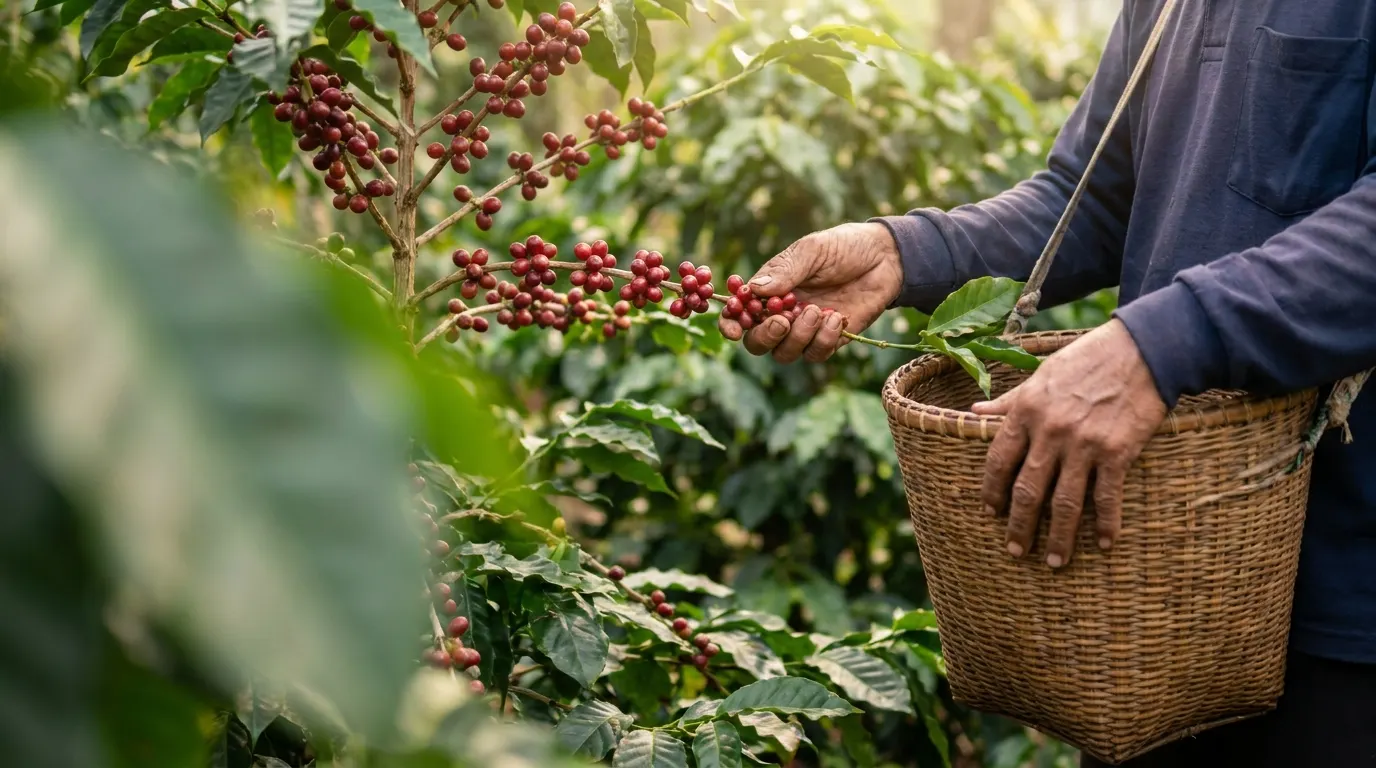
What Pour-Over Shows in Bolaven Coffee
Brewed this way, our washed high-grown Arabica shows exactly what the volcanic plateau builds into it: red apple and caramel up front, a milk-chocolate middle, and a clean brown-sugar finish with gentle citric lift. It's the presentation we use for every buyer cupping, because transparency is the point — of the method and of the coffee.
Try the same lot as pour-over and French press side by side and you'll taste the method's signature: the paper filter strips oils and fines, trading body for clarity. Neither is 'better'; pour-over simply tells the truth in higher resolution.