Importing from a landlocked origin sounds complicated. In practice, buying green coffee from Laos differs from buying from Brazil or Colombia in only a handful of specifics — and once you know them, the process is as routine as any origin. This guide walks through the full cycle the way we run it with our own buyers, from first sample to container delivery.
Step 1: Samples and Approval
Everything starts with cupping. Request type samples (representative of a standard quality) or offer samples (drawn from a specific available lot) — a reputable Lao exporter will courier 200–350 g samples with full documentation: variety, process, screen size, moisture, and crop year. Air courier from Pakse reaches Europe or North America in under a week.
Cup against your intended use. Washed Bolaven Arabica typically slots into blends and single-origin filter roles at 83–86 points; washed Fine Robusta earns its place in espresso blends. Approve the sample in writing — it becomes the quality reference for the contract.
Step 2: The Contract
A proper Lao green coffee contract specifies quantity (in 60 kg bags or metric tonnes), quality specification (screen, moisture, defect maximum, cup reference), price and Incoterms, shipment window, payment terms, and documents to be provided. Pricing may be outright or differential-based for Robusta against the London market.
Payment norms for first transactions are 30% advance with balance against documents, or an irrevocable letter of credit at sight. Our international contracts and payments run through our Hong Kong entity — a common structure for Lao exporters that simplifies banking for foreign buyers.
Step 3: Understanding the Shipping Routes
Laos has no seaport, so every container follows one of three corridors. The workhorse is road freight from Pakse to Laem Chabang, Thailand — roughly 700 km, 3–5 days including the border — where containers join deep-sea services worldwide. Transit to European ports runs 3–4 weeks on the water; US East Coast 4–5 weeks; intra-Asia 1–2 weeks.
Alternatives exist: the Laos–China Railway carries coffee north from Vientiane for Chinese buyers, and the eastern corridor to Da Nang, Vietnam suits some Asia-Pacific routings. Your exporter handles trucking, export clearance, and port handling; you simply choose FOB Laem Chabang (you control the ocean leg) or CFR/CIF (we deliver to your port).
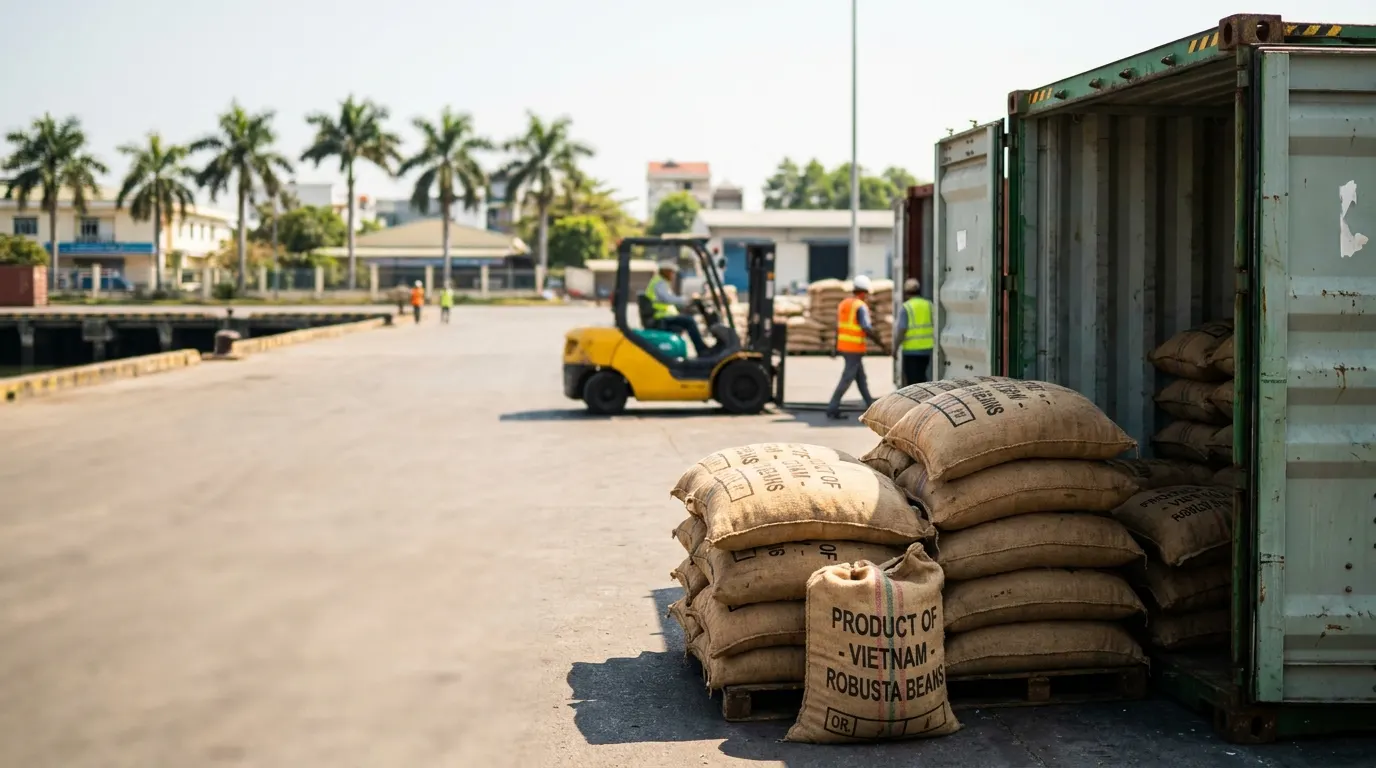
Step 4: The Document Package
A complete Lao coffee shipment travels with: commercial invoice and packing list; bill of lading; certificate of origin (Form A/ASEAN preferential certificates where applicable — Laos's LDC trade preferences mean zero or reduced tariffs into many markets, including the EU under Everything But Arms); phytosanitary certificate; fumigation certificate where required; ICO certificate of origin; and the SGS quality inspection report.
EU buyers should also request the EUDR data package — plot-level geolocation coordinates for the farms behind the lot, supporting the due-diligence statement importers must file. Established Bolaven exporters collect this as standard; ask for it at contract stage, not after loading.
Step 5: Arrival and Quality Verification
On arrival, sample and cup against the approved reference before releasing the lot to production. Green coffee shipped at 10–12% moisture in GrainPro-lined bags arrives in excellent condition; the SGS pre-shipment report gives you a contractual baseline if anything ever disputes. In several years of container shipments we have yet to see a properly packed lot arrive out of spec — the system, once set up, simply works.
First container feels like a project; second feels like a routine. If you want to walk through the process with a live offer sheet in hand, our export team will happily map your first shipment end to end.