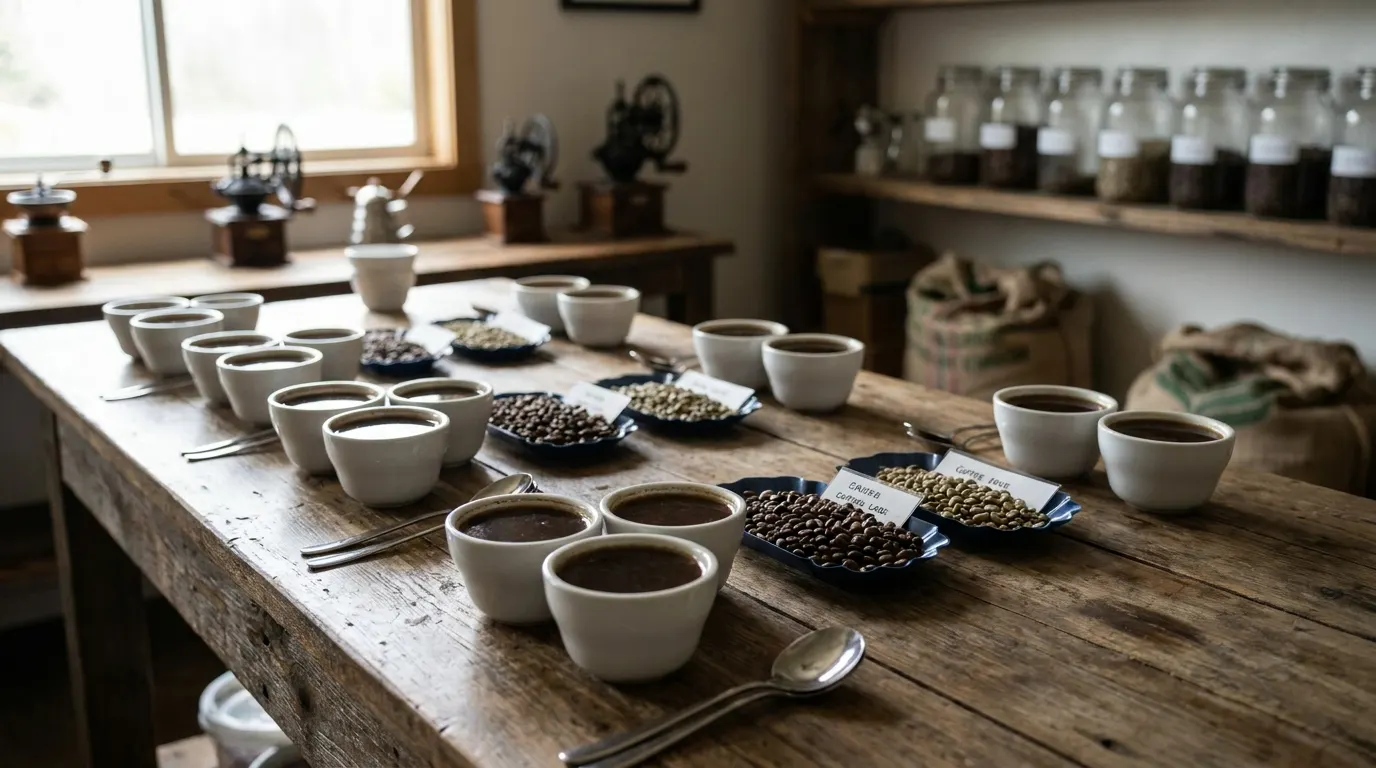
Every green coffee contract ultimately rests on a table of small bowls, a kettle, and a spoon. Cupping — the standardized tasting protocol used across the industry — is how exporters grade lots, how importers verify shipments, and how roasters choose what to buy. It looks arcane; it is actually a simple, learnable procedure designed to remove variables so the coffee alone speaks.
The Setup
The Specialty Coffee Association protocol specifies the conditions: 8.25 g of coffee per 150 ml bowl (a 1:18.2 ratio), ground slightly coarser than filter, water at 93°C, and a roast completed 8–24 hours before cupping — light enough to reveal character, developed enough to avoid grassiness. Five bowls per sample expose inconsistency: one defective bean shows up as one deviant bowl.
Everything is labeled blind. The most experienced cupper on the table is as susceptible to label bias as a beginner, which is why serious operations — ours included — cup purchases and export lots without knowing which bowl is which.
The Sequence: Fragrance to Finish
First, fragrance: smell the dry grounds. Then pour, wait four minutes, and break the crust with a spoon while inhaling — the aromatics released at the break are the most intense the coffee will ever offer. Skim the foam, wait for the liquid to cool toward 70°C, and begin tasting with the famous loud slurp, which aerosolizes the coffee across the whole palate.
Professionals taste each bowl repeatedly as it cools, because coffee changes with temperature: acidity shows early, sweetness and body mid-range, and defects — sourness, ferment, phenol — often hide until the cup is nearly cold. A coffee that still tastes sweet and clean at room temperature is a genuinely good coffee.
Scoring and What It Means for Buying
Cuppers score attributes — fragrance/aroma, flavor, aftertaste, acidity, body, balance, uniformity, clean cup, sweetness, and overall — producing the totals the industry treats as a common language: 80+ is specialty; 83–86 is strong commercial-specialty territory where most quality trade happens; 87+ enters competition range. Robusta has its own parallel scale under the Fine Robusta standards.
For a buyer, the practical skill is calibration: cup the same samples as your supplier and compare scores. When our clients cup a Volcana lot at their lab and their notes match the SGS-verified profile we shipped against, trust compounds. That, more than any single score, is what the ritual of the spoons is really for.