Not every coffee brand roasts its own coffee — and not every company that wants a coffee product is a coffee company. Hotels, cafés chains, corporate gifting programs, e-commerce brands, and retailers all sell coffee under their own names that someone else grew, roasted, and packed. Producing that private-label coffee at origin, rather than through a chain of intermediaries, changes the economics fundamentally.
What Origin Manufacturing Means
In the conventional chain, green coffee crosses the ocean, passes through an importer and a contract roaster, and is packed by a co-packer — each step adding margin and time before your brand touches it. Origin private-label collapses those steps: the same operation that grows and mills the coffee roasts it, grinds it if needed, and packs it into your branded format, shipping a finished retail-ready product.
The advantages are cost (fewer margins stacked), story (single-origin, farm-direct claims that are literally true), and freshness paradoxes worth understanding: roasted coffee ages faster than green, so origin roasting suits products with efficient sea/air logistics and formats — like nitrogen-flushed drip bags — engineered for shelf life.
The Drip Bag Format
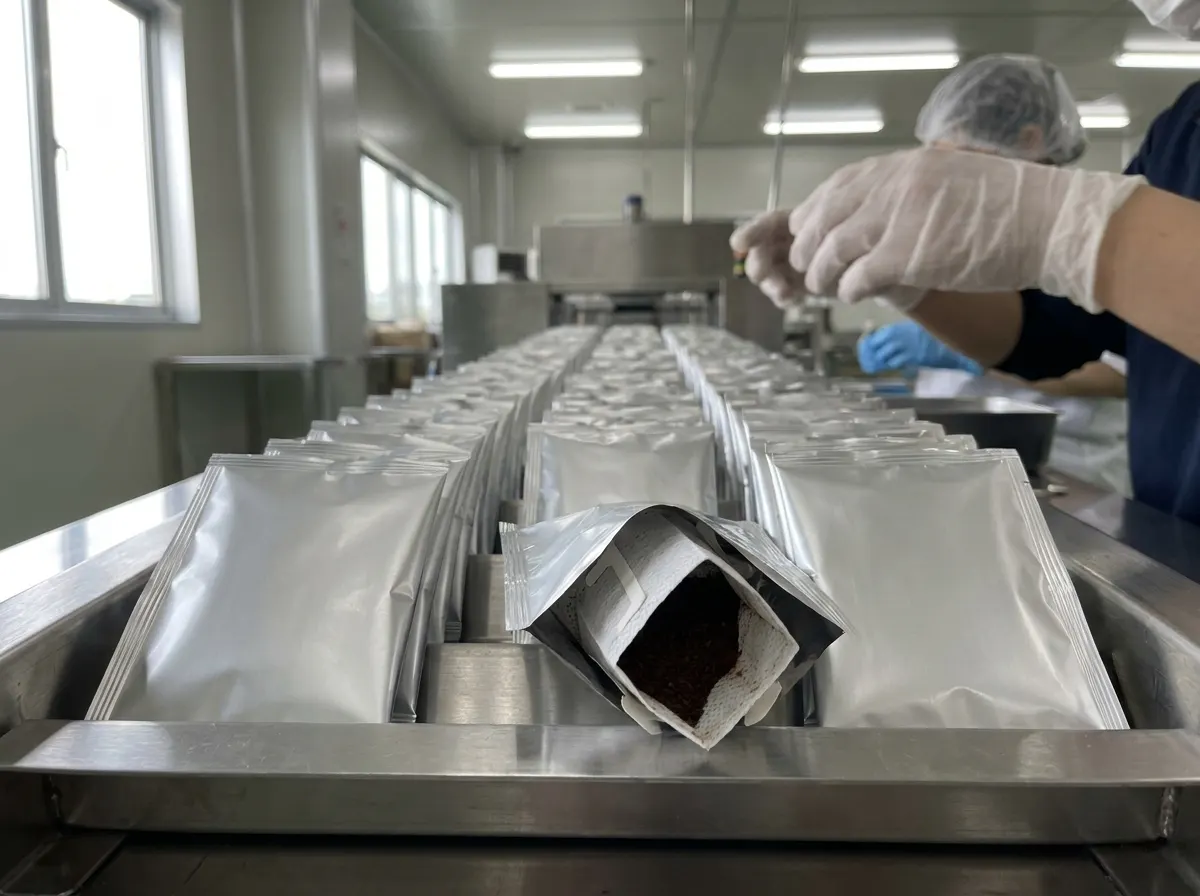
Single-serve drip bags — a flat-bottomed filter of ground coffee with fold-out hangers that perch on a cup — dominate convenient specialty coffee in Japan and Korea and are growing fast in Western markets. Each bag holds 10–12 g of ground coffee, individually sealed in nitrogen-flushed foil that preserves quality for 12 months or more.
For brands, drip bags solve the hardest problem in gifting and hospitality coffee: excellent cups with zero equipment. For manufacturers like us, they showcase Bolaven coffee in a format where freshness is locked at packing. Volcana produces drip bags under our own label and for private-label clients, with custom outer packaging from modest MOQs.
Practicalities: MOQs, Lead Times, and Compliance
Typical origin private-label MOQs are far lower than buyers expect: whole-bean roasted programs from a few hundred kilograms, drip-bag runs from a few thousand units — because the production lines already run for our own products. Lead times run 4–8 weeks from artwork approval to shipment, plus transit.
Compliance sits with labeling: destination markets require ingredient and origin declarations, roast dates or best-before dates, and in some markets nutrition panels; your manufacturer should provide compliant label templates for your designer. Food-safety documentation (HACCP-based processes, packaging food-grade certificates) travels with commercial documents. The right partner handles this routinely — and a sample carton, cupped and shelf-tested, tells you more than any brochure. Ours is an email away.