Organic is coffee's oldest and most recognized certification — and one of its most misunderstood. It is not a flavor claim or a quality grade; it is a farming-system audit with real rules, real costs, and a real market premium. Here is how it actually works from the origin side, and what buyers should know when sourcing certified lots.
What the Standards Require
The two standards that matter for coffee trade are EU Organic and USDA NOP, with close equivalence between them. Core requirements: no synthetic fertilizers, pesticides, or herbicides; documented use of approved inputs (compost, biological controls, mineral amendments); buffer zones against conventional neighbors; and a full paper trail from plot to export bag, audited annually by an accredited certifier.
Land entering the system passes through a transition period — three years during which organic practices are followed but the harvest cannot yet be sold as organic. This is the certification's real barrier: farmers bear organic costs at conventional prices for three seasons, which is why exporter and cooperative support during transition matters so much.
Group Certification: How Smallholders Get Certified
Individual certification would be impossibly expensive for a two-hectare farm, so smallholder origins use Internal Control Systems: the exporter or cooperative maintains inspection records for every member farm, trains an internal audit team, and the external certifier audits the system plus a sample of farms each year. One certificate covers the group; one lapse in the ICS can suspend everyone — which keeps standards genuinely enforced.
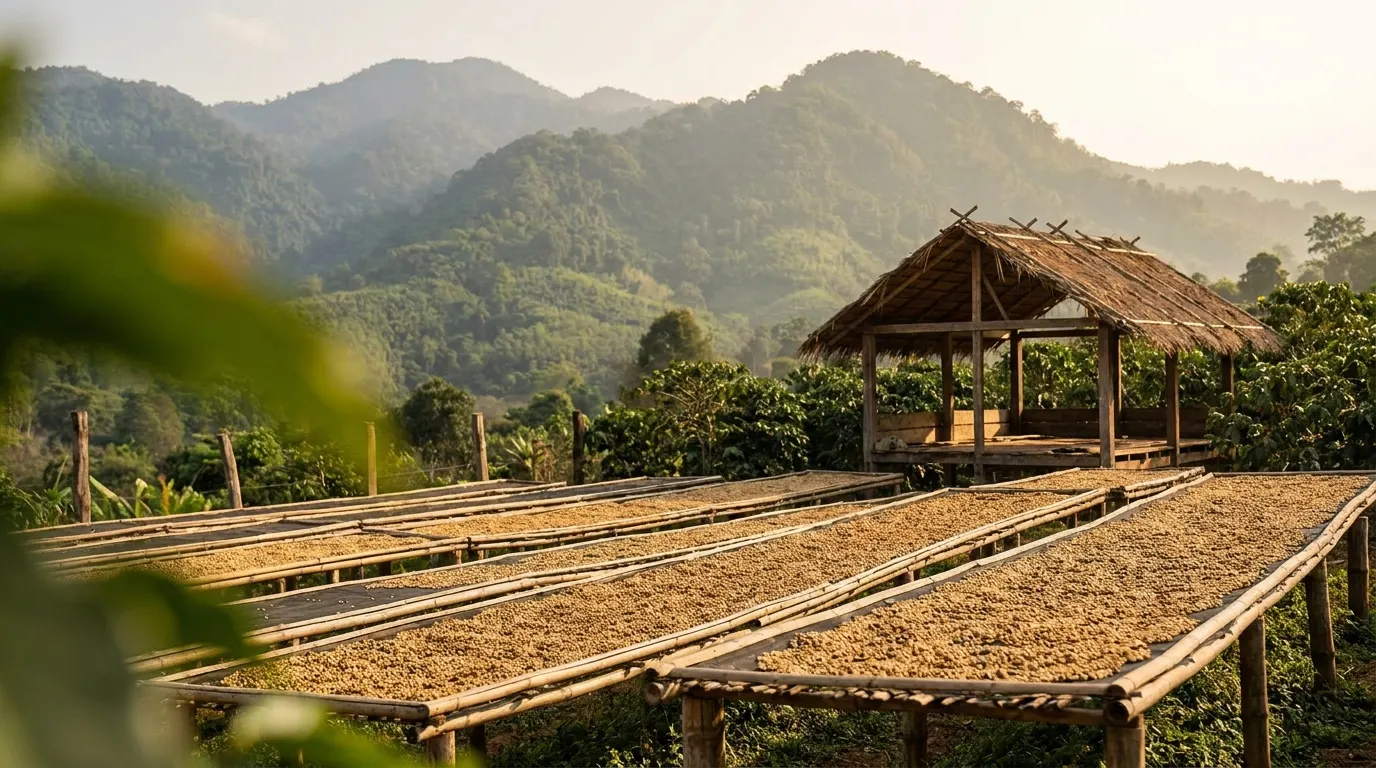
On the Bolaven Plateau, the economics of organic are unusually favorable because traditional practice was already low-input: most smallholder plots have never seen synthetic pesticides, shade and compost are customary, and the volcanic soil's natural fertility does work that chemistry does elsewhere. Certification here mostly formalizes reality rather than transforming it.
The Market: Premiums and Proof
Organic green coffee typically earns a premium of 30–60 US cents per pound over comparable conventional lots, with certified-plus-specialty commanding more. Demand is deepest in the EU, Scandinavia, and North America, and importers increasingly want dual certification — organic plus Fairtrade or Rainforest Alliance — for retail programs.
For buyers, the verification chain matters: valid certificates travel with each shipment (transaction certificates from the certifier, not just a farm certificate PDF), and organic status must be maintained through every custody transfer including warehousing. A reputable exporter manages this paperwork invisibly; your job is simply to confirm the transaction certificate matches the lot. Ask us about certified availability — our farmer network's organic coverage grows every season.