There is no Volcana Coffee without the farming families of the Bolaven Plateau. Our export lots are grown on smallholdings of one to three hectares around Paksong, Thateng, and Laongam districts — plots passed down through families, many first planted when the region's coffee tradition began under French administration in the 1920s.
The plateau is home to a patchwork of communities, including the Laven people who give the plateau its name, and coffee is the backbone of the local economy. When coffee prices are fair and stable, children stay in school, houses get roofs, and farms get replanted. When they are not, the opposite happens. That reality shapes how we buy.
Buying Cherry, Not Just Coffee
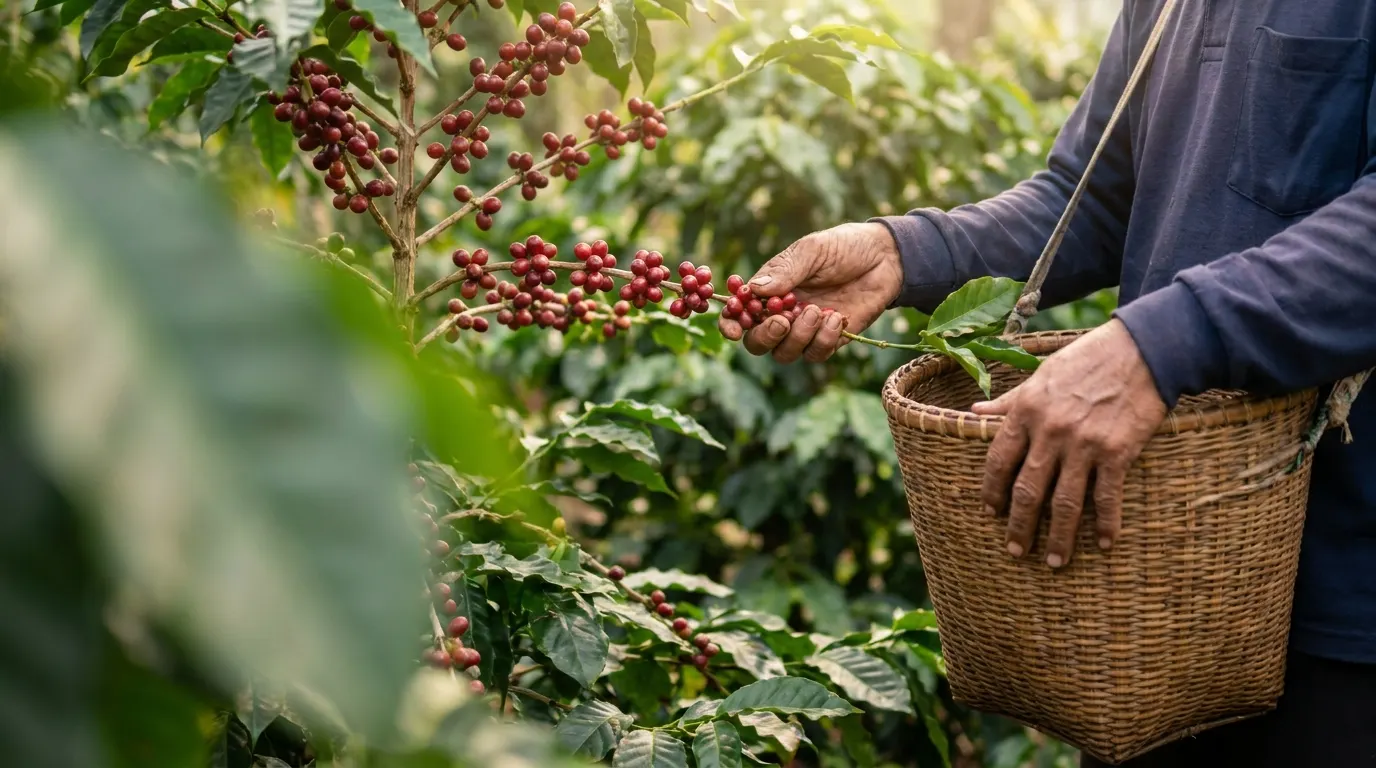
We purchase ripe cherry directly from farmers and process it centrally, rather than buying home-processed dried coffee of mixed quality. This matters for two reasons. First, it lets us control fermentation and drying — the most defect-prone steps — with proper equipment. Second, it means a farmer's job ends at what farmers do best: growing and picking excellent fruit.
For that fruit we pay a premium above the prevailing local cherry price, with an additional quality bonus for ripeness discipline. Payment is immediate — no waiting weeks for a middleman's settlement. Over a season, a family delivering consistently ripe cherry earns meaningfully more from the same trees.
Training That Pays for Itself
Each year before harvest we run picking and post-harvest workshops with our partner villages: why ripeness grading matters, how to store cherry in the hours before delivery, pruning and shade management for tree health, and soil care using composted pulp we return from the mill.
None of this is charity — it is shared economics. Better agronomy means healthier trees and heavier yields; better picking means higher premiums; better soil means the plateau keeps producing for the next generation. The training pays for itself on both sides of the relationship.
Pre-Financing and Long-Term Commitment
Harvest is expensive before it is profitable: pickers must be hired and fed weeks before cherry money arrives. For long-term partners we pre-finance harvest labor, repaid in cherry deliveries — removing the cash squeeze that traditionally pushed farmers toward loans at punishing informal rates.
We commit to buying across seasons, not cherry-picking good years. In return, our partner families commit their best fruit to us. Trust like this is built slowly and shows up in the cup: the consistency our buyers praise is, at its root, the consistency of relationships.
“Before, we sold dried coffee to traders and never knew what price we'd get. Now we deliver cherry, we're paid the same day, and the price is agreed before harvest. We can plan.”— Farmer partner, Thateng District