Green coffee is durable but not immortal. Between arrival and roasting — weeks for some buyers, a year for others — storage conditions quietly decide whether the coffee you cup at the end matches the one you approved at the start. The science is simple and the failures are predictable, which makes this the easiest quality insurance in the supply chain.
The Two Enemies: Moisture and Heat
Green coffee is hygroscopic — it breathes with ambient humidity toward equilibrium. Stored above roughly 65% relative humidity, beans re-absorb water toward moisture levels where mold and off-flavors reactivate; stored very dry, they fall below 9–10% and fade prematurely. The target zone is 50–65% RH, with the coffee holding its shipped 10–12% moisture.
Heat accelerates every aging reaction: each 10°C rise roughly doubles the rate of flavor loss. Cool and stable — 15–25°C without daily swings — beats cold and fluctuating, because temperature cycling drives condensation inside packaging. The classic failure is a warehouse wall or loading-dock spot where sun hits bags each afternoon.
Packaging: What the Layers Do
Traditional jute breathes — fine in a climate-controlled warehouse, risky elsewhere. Hermetic liners (GrainPro and equivalents) seal the bean's environment against humidity swings and pests, and have become the specialty standard; coffee in liners holds cup quality months longer in tropical and variable climates. Vacuum-packed boxes go further still for micro-lots, essentially freezing quality in place at premium cost.
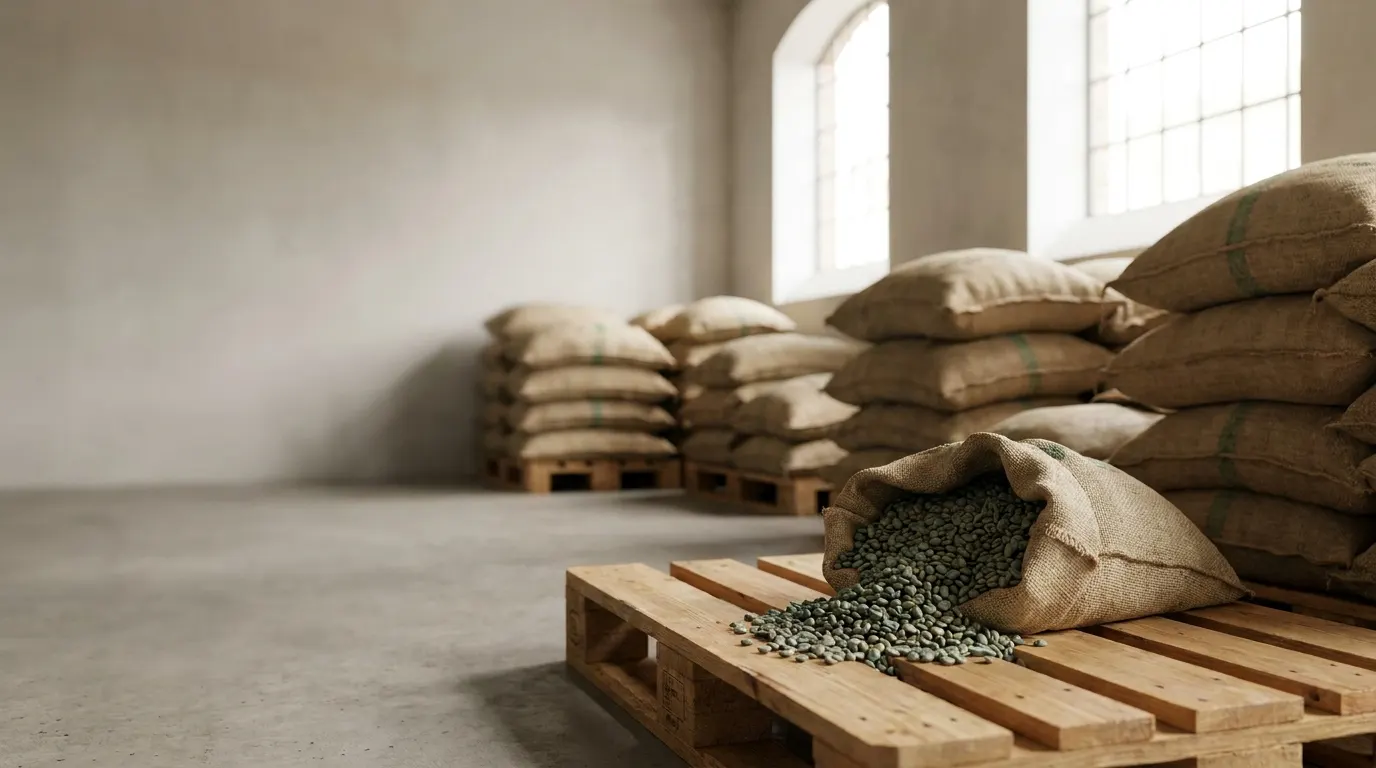
Whatever the packaging: off the floor on pallets, clear of exterior walls, away from anything aromatic — green coffee absorbs odors enthusiastically, and a pallet stored beside spices or diesel will roast into evidence of it.
Shelf-Life Math and Rotation
Well-stored washed coffee in hermetic liners cups essentially fresh for 9–12 months and remains sound beyond; jute-only storage in uncontrolled conditions can show 'past-crop' fade — papery, flat, woody — in as little as four to six months. Naturals and honeys, with more fruit material, reward faster rotation.
Practical program: first-in-first-out rotation, monthly spot-cupping of held lots against arrival samples, and buying cadence matched to roasting velocity rather than opportunistic volume. And align the calendar with origin: Lao fresh crop ships February–June, landing precisely when you want stock that will hold quality through a northern-hemisphere year. We're happy to structure split shipments so your warehouse, not your coffee, does the waiting.