It is 5:40 in the morning in a village outside Paksong, and the Bolaven Plateau is doing what it does in December: hiding under a blanket of mist that will burn off by eight. In a wooden house raised on posts, coffee is already brewed — boiled the local way, sweet and strong — and by the time the sun clears the shade trees, the family is walking the red-earth path to their plot with woven baskets on their hips. This is harvest season, and every dry-season day counts.
Morning: The Picking Rounds
The farm is just over two hectares — about three thousand trees, mostly Catimor planted in rows under retained forest trees, with a stand of old Typica the grandfather planted decades ago. Picking is a family operation joined by two hired pickers from a neighboring village, paid by ripeness-graded basket rather than raw weight since the family began selling cherry to the washing station.
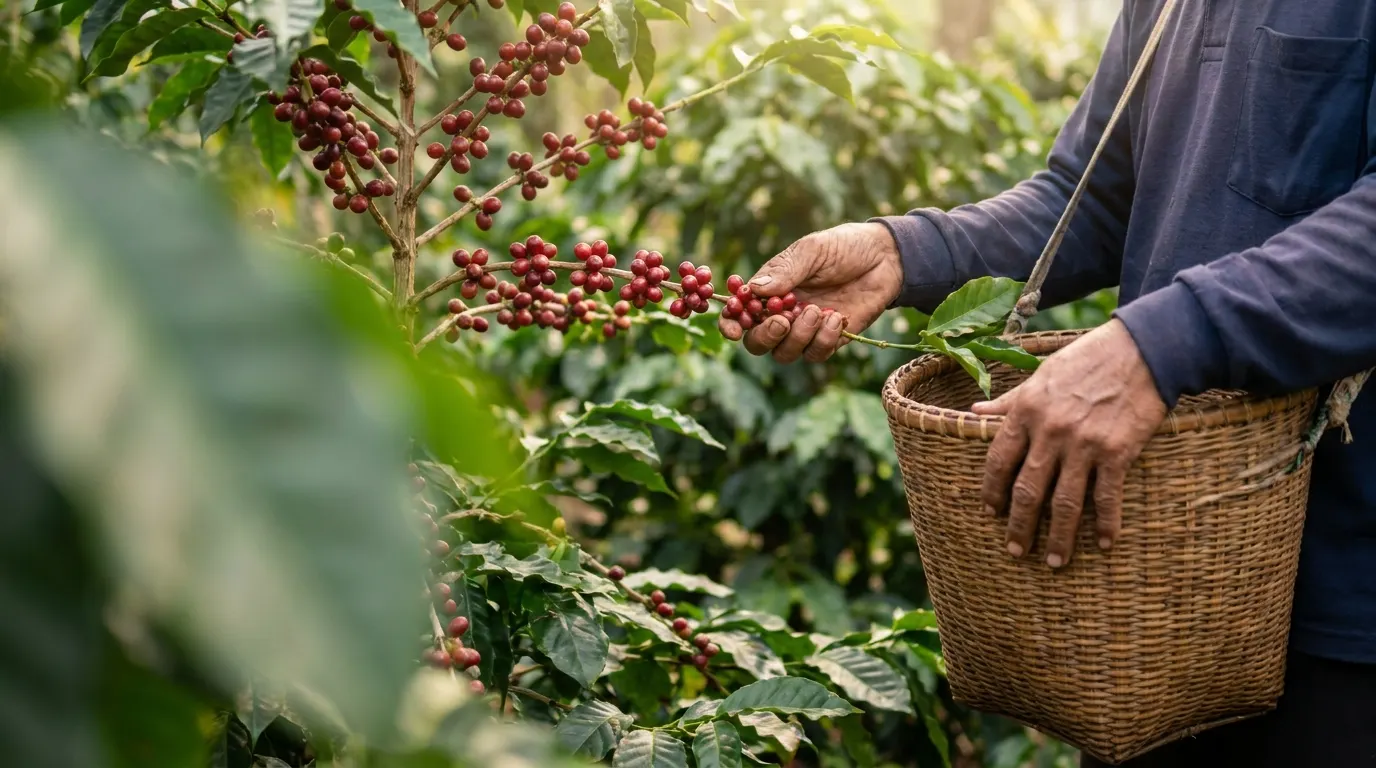
The work is rhythmic and exacting: thumb and forefinger, a small twist, only the deep-red cherries — green ones stay for the next pass, a week away. An experienced picker harvests 60–80 kg of ripe cherry in a day on good trees. Conversation carries down the rows; children too young for school nap in cloth slings under the shade canopy.
Midday: Food, Rest, and Farm Work
At noon the heat peaks and the family gathers in the plot's bamboo shelter: sticky rice, jeow bong chili paste, gathered greens, sometimes grilled fish from the stream below the village. An hour's rest follows — plateau tradition as sensible as any labor code — before afternoon tasks split the family: more picking for some, while the father prunes exhausted branches and checks the young Marsellesa seedlings planted last rainy season between the old rows.
Evening: The Delivery
By 4:30 the day's baskets are sacked and weighed — 240 kilograms today — and loaded onto the family's tak-tak, the two-wheeled tractor that is the plateau's universal vehicle. The washing station is twenty minutes away; the queue of neighbors' tractors, a daily social event. Cherry is floated, graded, and weighed under the family's supplier code, and payment lands the same evening: cash rate above the trader price, ripeness bonus on top.
Riding home in the quick tropical dusk, the family passes the drying beds where yesterday's cherry — theirs among it — lies turning gold in parchment. In four months it will be green coffee in a container at Laem Chabang; in six, espresso in a city none of them have visited. That distance is exactly what Volcana's model is built to shorten: same-day payment, named-village lots, and a share of the final price that stays on the plateau where the work is done.