Green coffee is shelf-stable, grassy-smelling, and nearly flavorless brewed. Twelve minutes of managed heat transforms it into the most aromatically complex beverage ingredient on earth — over 800 volatile compounds. Roasting is where that transformation is steered, and understanding its stages explains why the same Bolaven lot can taste of bright apple or dark chocolate depending on who roasts it.
The Three Phases
Drying (roughly minutes 0–4): the bean's 10–12% moisture must evaporate before browning chemistry can begin. Rushing this phase with excessive heat scorches the outside while the core lags — the source of uneven, harsh roasts.
Maillard phase (minutes 4–8): from about 150°C, amino acids and sugars react in the same chemistry that browns bread and seared meat, building hundreds of flavor compounds and turning the bean gold to brown. Sugar caramelization joins in above 170°C, trading sweetness toward bitterness the longer it runs.
Development (first crack onward): around 196°C the bean's internal steam pressure fractures its structure with an audible pop — first crack. The minutes after it are 'development time', where roasters make their defining choice: stop early for acidity and origin character, or push on as sugars darken toward chocolate, then smoke.
What Roast Levels Actually Mean
Light roasts (dropped soon after first crack) preserve the most origin character — florals, fruit acids, delicate sugars — and suit filter brewing. Medium roasts balance origin and roast flavors: caramel deepens, acidity rounds, body builds; the sweet spot for most espresso and all-purpose coffee. Dark roasts (at or past second crack, ~224°C) are dominated by roast chemistry itself — bittersweet, smoky, heavy — with origin character largely overwritten. None is 'better'; each is a different answer to what you want the cup to say.
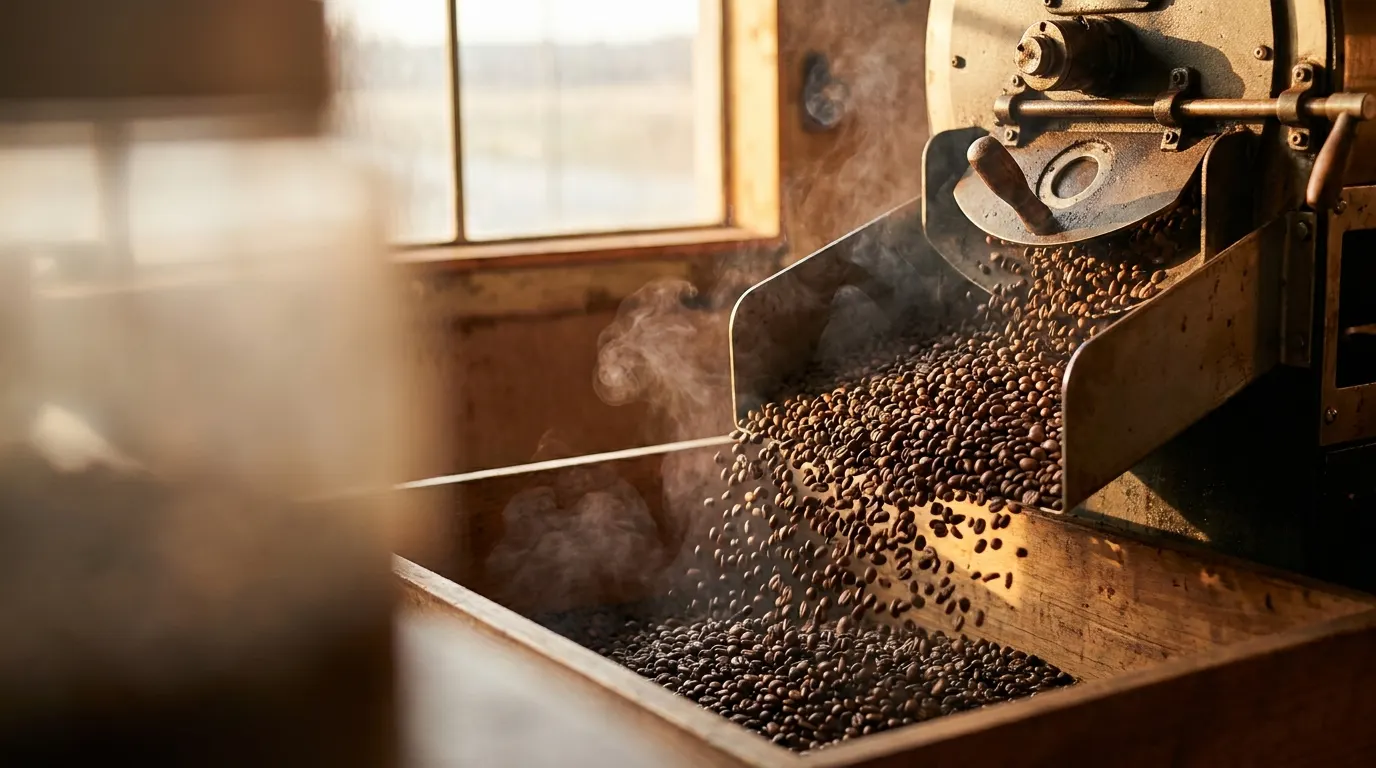
Matching Roast to Bean
Dense high-grown beans — our washed plateau Arabica included — absorb heat slowly and reward patient, fuller development; their sturdy sugars shine at medium levels where softer lowland coffees would flatten. Robusta, with less sugar and different cell structure, develops faster and turns ashy if pushed dark; fine Robusta does its best work at medium, where chocolate and malt peak.
For roasters trialing Lao coffee, our standing profile note: start Bolaven Arabica at your Guatemala curve, not your Sumatra curve, and give Fine Robusta 10% less development than your commercial Robusta component. Then cup, adjust, repeat — roasting, like everything upstream of it, is iteration with a spreadsheet.