Ask what coffee costs and you'll get three different kinds of answers: a futures ticker, a differential, or a flat number. All three are real prices — they're just different pricing systems coexisting in one trade, and knowing which one governs your contract determines your risk, your timing options, and occasionally your sanity when markets move 20% in a month.
The Reference Layer: Futures Markets
Arabica's global reference is the ICE 'C' contract in New York, quoted in US cents per pound; Robusta's is the ICE London contract in dollars per tonne. These are hedging markets for standardized commodity coffee, but their prices radiate through the entire trade — when frost threatens Brazil or funds reposition, every origin's phone rings. The C market is coffee's weather system: nobody's contract exists outside it entirely.
The Trading Layer: Differentials
Most commercial coffee trades as a differential against the reference: 'Colombia excelso +38 over C', 'Vietnam G2 −80 under London'. The differential prices everything specific — origin reputation, grade, availability, freight position — while the futures leg carries the market level. Buyers can fix the two legs at different times ('price-to-be-fixed' contracts), which is how importers manage exposure: book the differential now, fix the futures leg when the market dips.
Differentials tell strategic truths: when an origin's differential strengthens while the C falls, demand for its specific quality is outrunning the commodity tide — the pattern behind fine Robusta differentials in recent years.
The Specialty Layer: Outright Pricing
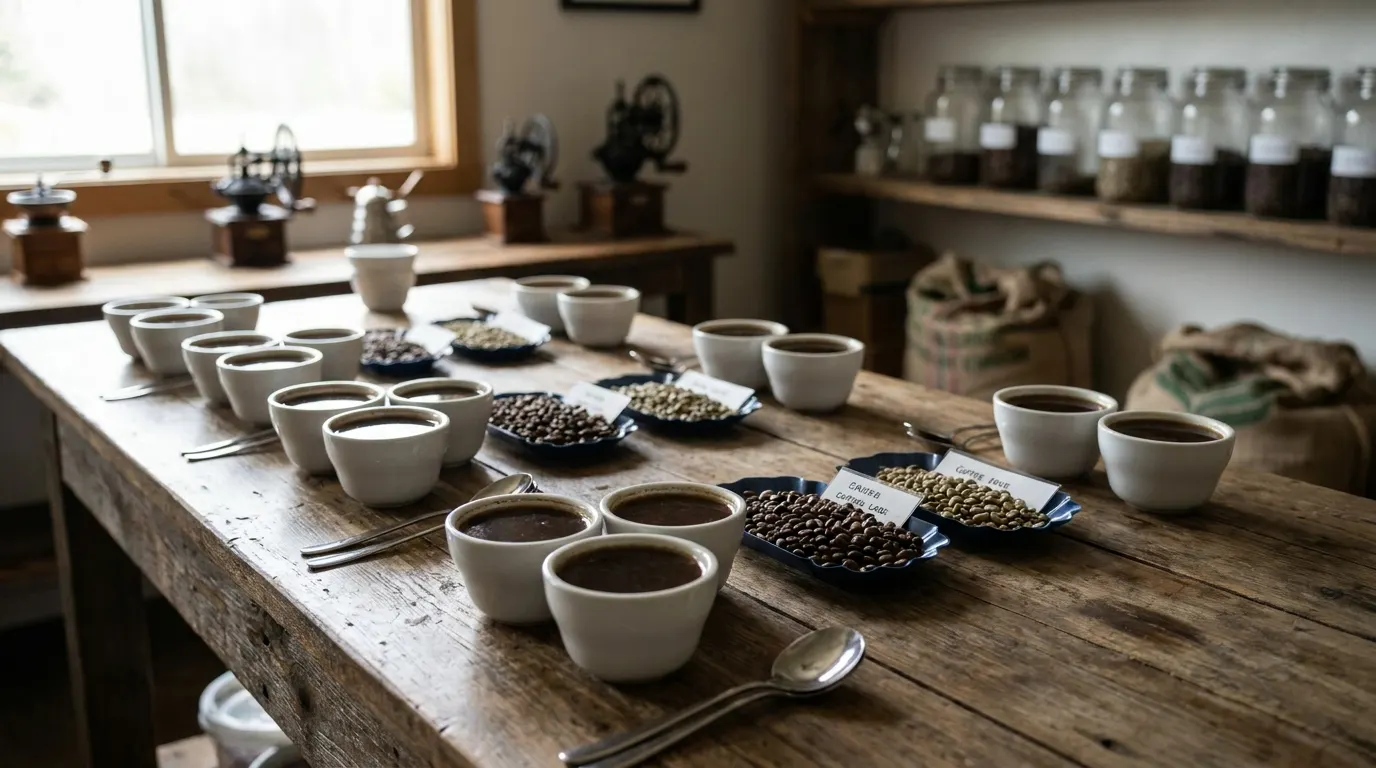
Above roughly 84 points, coffee increasingly escapes the futures market's gravity: specialty lots trade at outright prices — a flat $/kg negotiated on cup quality, lot size, and relationship, largely decoupled from the C. The logic is sound: an 86-point washed lot is not interchangeable with commodity deliverable coffee, so why price it as a spread against one?
Volcana prices this way for our specialty lots: outright, stable across the season, built up transparently from farmer cherry premiums through processing and export costs. Our Fine Robusta references the London market loosely for context but trades on cup and specification. What buyers gain is predictability — a budget number that doesn't lurch with fund flows — and a supply chain where the price connects visibly to the people who grew the quality. Ask for the current offer sheet and you'll see every layer, itemized.