Statistics describe Lao coffee as an export commodity — half a million bags, top-three agricultural earner. On the plateau itself, harvest is something less abstract: four months when the whole social calendar, labor market, and cash economy of hundreds of villages synchronize around ripening cherries. Understanding that rhythm is understanding what coffee actually is in Laos.
The Great Seasonal Mobilization
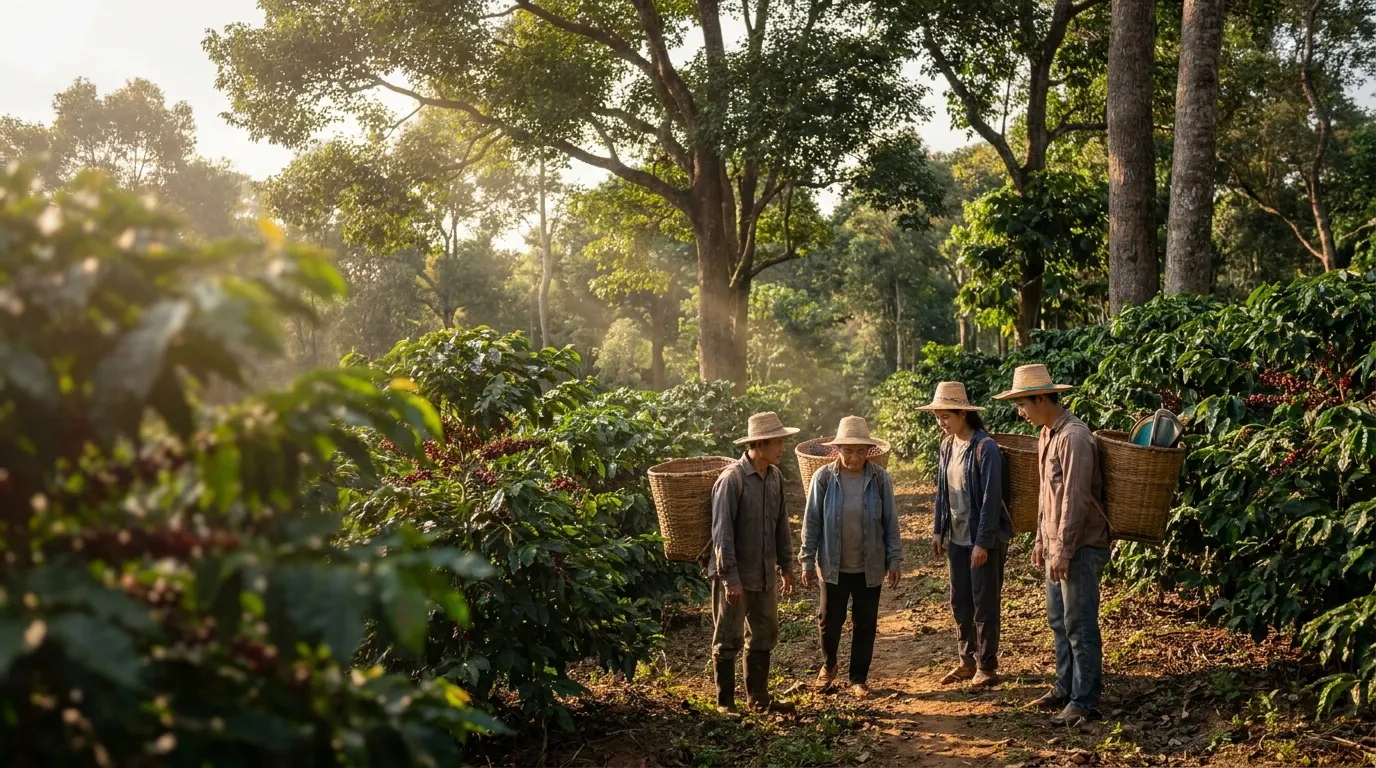
From November to February, the plateau's population effectively grows: relatives return from Pakse and Vientiane, and picking crews travel up from lowland villages where the rice harvest has just ended — an agricultural relay the region has run for generations. A two-hectare family farm needs six to ten pickers at peak; larger farms, dozens. Picking pay, meals included, makes harvest the year's major earning season for thousands of households that don't own a single coffee tree.
Schools feel it too: the term calendar was historically shaped around harvest, and teachers still know December attendance tells them how the crop is running. One goal of ripeness-premium payment systems — ours included — is straightforward: higher income per family workday means less pressure for children's hands in the baskets.
Cash Flow as Community Infrastructure
Cherry money moves daily during harvest — same-evening payment at the washing station scales — and the village economy moves with it: motorbike repairs happen, debts clear, weddings get scheduled for the post-harvest months when pockets are full. The difference between a good-price year and a bad one is visible in roof metal and school uniforms by March.
This is why buying structure matters as much as buying price. Traders paying weeks later at opaque rates export the plateau's liquidity along with its coffee; direct cherry buying at posted premiums keeps the velocity local. It is also why we pre-finance harvest labor for partner families — the season's costs land before its income, and bridging that gap at zero interest is cheap for us and transformative for them.
After the Last Cherry
Harvest ends with Boun season — the festival months — and the plateau exhales: drying yards empty into warehouses, mills shift to hulling and grading, and farming families turn to pruning, planting, and the year's quieter work. At the washing stations, cupping tables sort the season into lots that will carry village names to roasteries eleven time zones away.
Every bag of Volcana coffee is, in a real accounting, four months of this: a community's synchronized labor, paid fairly and promptly, concentrated into sixty kilograms of green coffee. We put farmer stories on this blog for the same reason we put SGS reports in our shipments — buyers deserve to know exactly what they're buying. It's more than beans.