Coffee is an annual rhythm, and every origin dances it differently. On the Bolaven Plateau the year swings between a wet season that builds the crop and a dry season that harvests it — a fortunate alignment that shapes everything from flavor to logistics. Here is the full calendar, month by month, as our farmer partners live it.
March – May: Flowering
The first rains after the dry season trigger flowering — orchards turn white and jasmine-scented for a few spectacular days, usually in two or three waves as showers arrive. Each flowering wave becomes a ripening wave seven to nine months later, which is why harvest stretches across months rather than weeks.
Farmers spend these months pruning, managing shade trees, and applying compost — the mill's returned coffee pulp among it — as the trees set fruit. A good flowering with steady follow-up rain is the first forecast of the coming crop's size.
June – September: The Green Months
The southwest monsoon delivers most of the plateau's 1,800–2,500 mm of annual rain. Cherries develop slowly in the cool, wet conditions — the plateau's 18–22°C averages are the slow-cooker that builds density and sweetness. Fields need weeding, young trees need protection, and washing stations use the quiet months for equipment maintenance and bed repairs.
By September the earliest cherries begin to blush on lower, warmer plots, and the mills wake up: tanks are scrubbed, moisture meters calibrated, drying beds re-meshed, and picking crews organized village by village.
October – February: Harvest
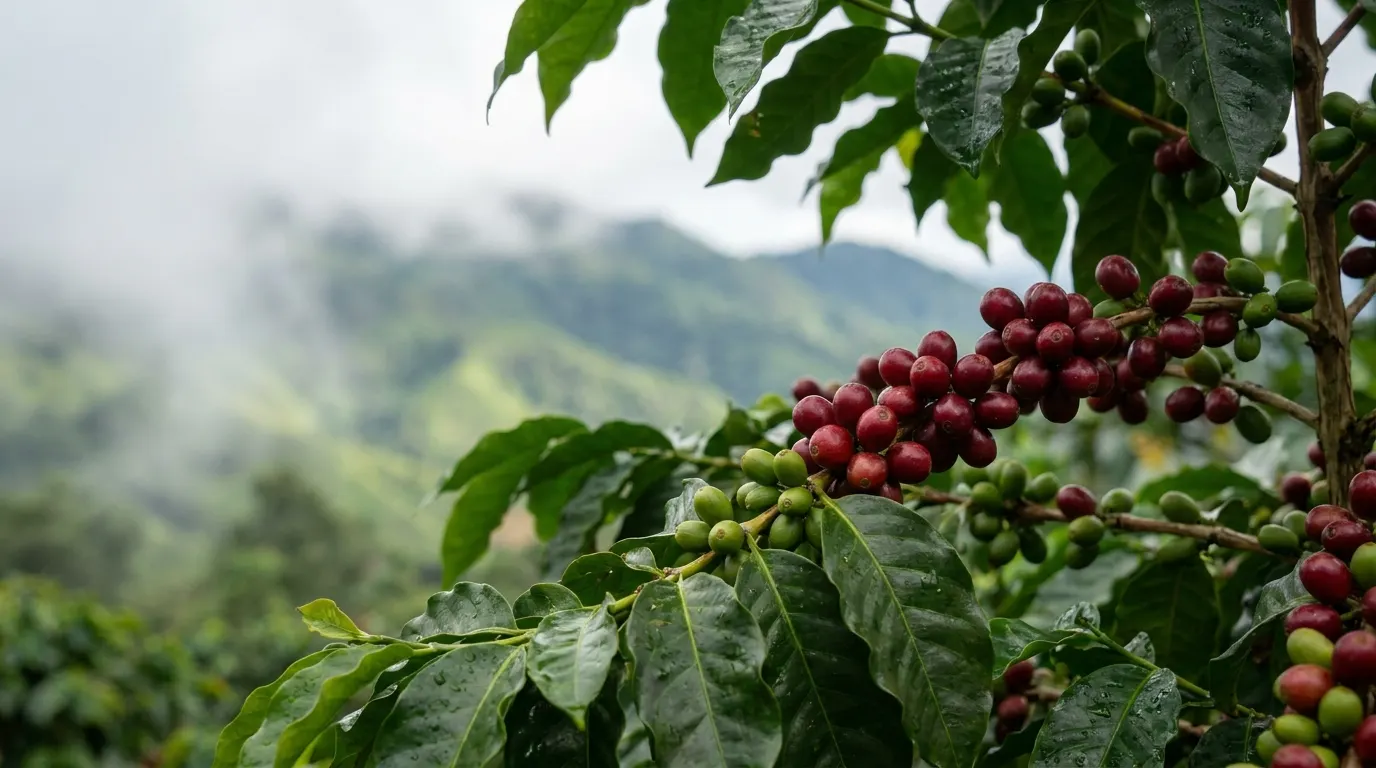
The rains taper, the sky clears, and picking begins — Robusta at the lower elevations first, Arabica following as the higher zones ripen from November. This is the plateau at full intensity: pickers moving through rows selecting only red cherry, deliveries floated and pulped by nightfall, drying beds filling with parchment and whole cherries under the dry-season sun.
The harvest peak runs November through January, when cool nights can drop below 15°C — superb for slow drying — and every able hand in the district is working coffee. Because the dry season is reliable, cherries dry evenly with little rain risk, one of the plateau's quiet processing advantages over wetter origins.
February – May: Milling, Grading, and Shipment
As picking winds down, the dry mill takes over: rested parchment is hulled, screened, density-sorted, and hand-picked to export grade. Cupping tables run daily to classify lots. SGS inspections happen here, and the first containers of the new crop truck toward Laem Chabang from late February, with fresh-crop shipments flowing through May and June.
For buyers, the calendar translates simply: contract October–January, receive fresh Lao crop in Europe or North America from April onward — perfectly counter-seasonal to Central American arrivals, and ideal for filling the northern-hemisphere summer gap with fresh coffee.